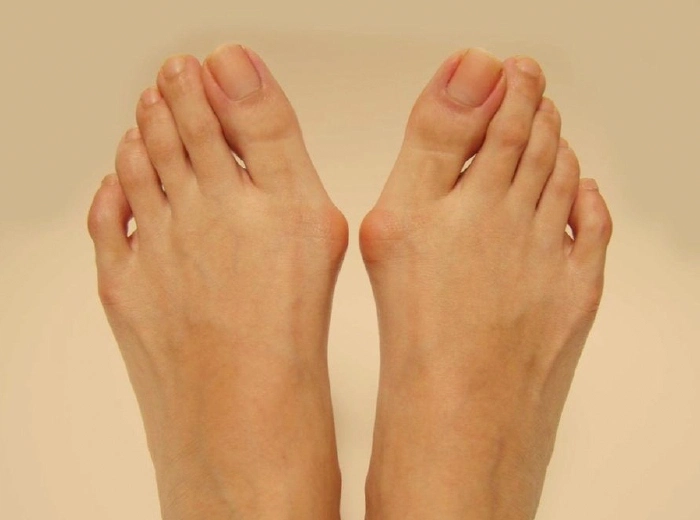
Bunions
So you looked down one day and noticed your big toe is… not where it used to be. There’s a weird bony lump on the side of your foot, your toe is angling inward like it’s trying to spoon the other toes, and you’re standing there thinking “when did this happen?”
Welcome to the bunion club. Population: way more people than you’d think. And no, it’s not just an old lady thing.
What even is a bunion?
A bunion, or if you want to sound fancy at a dinner party, hallux valgus, is basically what happens when the bone at the base of your big toe decides to drift outward, creating that signature bump on the inside of your foot. Meanwhile, your big toe angles inward toward the other toes like it’s trying to merge with them. Nobody consented to this group cuddle.
Here’s the thing most people get wrong: a bunion isn’t some random growth that popped up on your foot. It’s the actual bone structure shifting out of alignment. Imagine a door slowly warping off its hinges over years. The hinge is still there, it’s just crooked now. That’s your big toe joint.
And here’s what’ll really bake your noodle: this didn’t happen overnight. Your toe has been slowly drifting for years, maybe decades, and you probably didn’t notice until the bump got obvious or it started hurting. It’s the result of your foot being put through conditions it was absolutely not designed for. Tight shoes, flat surfaces, zero barefoot time, foot muscles weaker than your excuses to skip leg day.
The not-so-great news? Once the bone shifts, it doesn’t just politely slide back on its own. The actually great news? You can absolutely stop it from getting worse, kill the pain, and make real improvements. Stick around.
Why your toe decided to bail
Bunions don’t just show up because the foot gods are punishing you. There are real reasons behind this, and once you get it, you can start doing something about it:
Your Family Tree (Thanks Mom)
Shoes That Should Be Illegal
Wonky Foot Mechanics
Certain Health Conditions
Signs your big toe is going rogue
Bunions are sneaky little punks. They start quiet, almost polite about it, and then gradually become that friend who won’t stop talking at a party. Here’s the progression from “huh” to “oh no”:
The Visual Clues
- The Bump: A bony bulge on the inside of your foot, right at the big toe joint. Starts subtle. Gets more “hey look at me” over time. You’ll know it when you see it.
- The Drift: Your big toe starts leaning toward the other toes like a drunk person on a subway. In serious cases, it can actually climb over or under the second toe. Pure anarchy.
The Painful Part
- Aching and Soreness: The joint starts complaining, especially after long walks or wearing shoes that don’t give it space. Some days it’s a dull throb. Other days it feels like you’re stepping on a LEGO every time your foot hits the ground.
- Redness and Swelling: The skin around the bump gets angry. Red, puffy, warm to the touch. It’s inflamed and it is NOT being quiet about it.
The “Okay This Is Getting Real” Part
- Stiff Big Toe: Your big toe starts losing range of motion. Bending it hurts. Pushing off while walking gets harder. Your foot is basically filing a formal complaint.
- Shoe Shopping Becomes a Nightmare: Finding shoes that fit without pressing on the bunion becomes a properly miserable experience. Welcome to “nothing fits and I hate everything” territory.
Look, the earlier you catch this and start making changes, the better your chances of keeping things manageable. Don’t wait until your big toe is basically pointing at your pinky toe before you take action.
Bunion myths that need to die
There’s SO much terrible information about bunions out there that it’s practically its own industry. Let’s kill some of this nonsense right now:
- “Bunions are just cosmetic”, Absolutely not. That bone shift changes your entire foot mechanics. It affects how you walk, how forces distribute through your whole body, and can cause knee, hip, and even back problems. This is a structural issue, not a vanity project
- “Only old ladies get bunions”, Wrong. Young people, athletes, men, kids, anyone can develop bunions. Women get them more often partly due to shoe choices, but this is an equal opportunity foot disaster. Nobody’s safe
- “Nothing works except surgery”, Garbage. Total garbage. You can slow progression, reduce pain, and actually improve alignment with natural methods. Surgery is a last resort for extreme cases, not step one on the treatment plan
- “Tight shoes cause bunions”, Half-truth. Tight shoes absolutely accelerate bunions and make them worse, but they’re usually not the only cause. Genetics, weak foot muscles, and crappy mechanics all play a role. It’s a team effort of bad circumstances
- “Orthotics will fix it”, Nope. They might redistribute some pressure and ease symptoms temporarily, but they won’t reverse a bone shift. And here’s the kicker, long-term, they can actually make your foot muscles weaker by doing all the work for them. Band-aid on a broken system
- “If it doesn’t hurt, don’t worry about it”, Dangerous advice right here. Bunions are progressive. Just because it’s chill right now doesn’t mean it’ll stay that way. Catching it early and changing habits is a THOUSAND times easier than dealing with a severe bunion later
How to actually fight back
Alright, enough doom and gloom. Let’s talk about what you can actually DO. And no, the answer isn’t “google surgeons near me.” The answer is to rebuild your foot from the ground up, literally. Your feet are way more adaptable than you think.
1. Break Your Toes Out of Shoe Jail
First things first: stop cramming your feet into shoes that treat your toes like prisoners. Look for shoes with a wide toe box that lets your toes actually spread the way nature intended. Zero drop (flat from heel to toe) is ideal because any heel elevation shifts your body weight forward and shoves your big toe sideways. Flexible soles that bend and twist let your foot muscles do real work instead of just being passengers on a rigid platform.
Think about it, if your toes have been squeezed together inside narrow shoes for decades, they’ve literally forgotten what “spread” feels like. Give them room. Your big toe needs space to start its journey home.
2. Go Barefoot. Like, Actually Barefoot.
Your feet evolved over millions of years to walk on natural terrain, rocks, pebbles, dirt, sand, grass. Not flat concrete inside cushioned coffins. Walking barefoot on natural surfaces fires up every muscle in your foot and naturally encourages your toes to splay.
Start easy. Walk on grass for 10-15 minutes. Graduate to pebbles and uneven stuff. The sensory feedback from natural ground wakes up your foot’s nervous system in ways a smooth floor never will. It’s like switching your foot from autopilot to manual, suddenly everything comes alive and starts doing its job.
3. Train Those Foot Muscles
Your feet have over 100 muscles, tendons, and ligaments, and most people have literally never consciously worked any of them. Weak intrinsic foot muscles mean your big toe joint has zero muscular backup keeping it in line. No wonder it drifts.
Toe yoga, marble pickups, towel scrunches, foot doming, yeah they look goofy, but they’re rebuilding the internal architecture of your foot. Your brain might not even know how to talk to some of these muscles at first. That’s fine. Be patient. The neural pathways will form. You’re basically teaching your foot to be a foot again.
4. Mobilize That Stubborn Big Toe
Your bunion-affected toe has been drifting sideways for a while now. Gently pulling it back toward its natural alignment and holding it there helps maintain and improve range of motion. Use your hands to guide the big toe into proper position, hold for 30 seconds, repeat throughout the day.
It’s not gonna snap back into place like nothing happened. But consistent, gentle mobilization sends a clear signal to your body: “Hey, I want this toe HERE, not over there.” Combine that with strengthening and you’ve got a real recipe for improvement.
5. Walk on Rocks. No, Seriously. Rocks.
This gets its own section because it’s THAT effective. Walking barefoot on rocky, pebbly, uneven natural surfaces forces your toes to spread, grip, and adapt in ways that literally nothing else replicates. It strengthens muscles you didn’t know existed, supercharges your proprioception, and naturally nudges your big toe toward better alignment.
Find a pebbly beach, a rocky trail, or just get a bag of river stones and make a foot path in your yard. Start short, your feet will be sore because those muscles haven’t worked in ages. Build up gradually. This is ancient foot therapy that costs basically nothing and works ridiculously well.
6. Don’t Forget the Rest of the Chain
Your foot doesn’t operate in a vacuum. Weak hips, tight calves, dodgy ankle mobility, all of that affects how forces travel through your foot and can fuel bunion progression. Calf raises, balance work, hip strengtheners… the whole kinetic chain matters.
Think of your body like a building. If the foundation (your feet) is off AND the upper floors (hips, core) are wobbling, everything in between gets crushed. Strengthen the whole system and your feet catch a break.
Exercises that actually slap
These target the muscles and mechanics that matter most for bunion management. Do them consistently and your feet will literally feel like different feet:
- Toe Yoga: Lift your big toe while keeping the other four down. Then switch, four up, big toe down. Your brain will absolutely short-circuit the first few tries. That’s normal. That confusion IS the workout. You’re building neural control that most people have never developed
- Big Toe Mobilization: Gently pull your big toe away from the others, back into proper alignment. Hold 30 seconds, do it 10 times. While watching TV, sitting at your desk, on a boring video call, wherever. Frequency beats duration here
- Foot Doming (Short Foot): Try to raise your arch by pulling the ball of your foot toward your heel WITHOUT curling your toes. This activates those deep intrinsic muscles that are supposed to stabilize your toe joints. The GOAT of foot exercises. Also the hardest to learn. Keep trying
- Towel Scrunches: Lay a towel on the floor, scrunch it toward you using only your toes. Add a book or weight on it as you level up. Simple. Brutal. Effective. Your toes will cramp. That means it’s working
- Marble Pickups: Scatter some marbles on the floor, pick them up with your toes and drop them in a bowl. Fires up all those tiny sleeping muscles. Perfect for multitasking with whatever you’re streaming
- Single-Leg Balance: Stand on one foot for 30-60 seconds. Progress to eyes closed, then unstable surfaces. Better balance = better foot muscle activation = more support for that drifting big toe joint
- Barefoot Walking on Natural Ground: Grass, sand, pebbles, rocks, any terrain that forces your foot to actually work. Start with 10 minutes and build up. This is the closest thing to a cheat code for foot health
- Calf Raises: Single leg, slow and controlled. Rise up, hold at the top, lower down slowly. 3 sets of 15 per side. Strong calves support healthier foot mechanics and take pressure off the forefoot where your bunion lives
Day-to-day game plan
Already got bunions and need to manage them while you’re working on getting stronger? Fair. Here’s how to keep things comfortable while you rebuild:
Foot Care That Actually Matters
- Ice After Big Days: If your bunion is throwing a tantrum after a long walk or a rough day on your feet, 15 minutes of ice on the joint calms the drama. Inflammation is your body’s way of saying “yo, ease up.”
- Warm Soaks for Stiffness: Soaking your feet in warm water loosens up that cranky joint and feels like a vacation for your toes. Throw in some epsom salt if you’re feeling bougie about it.
- Self-Massage: Roll a tennis ball under your foot, work around the joint with your thumbs. Breaks up tension, improves blood flow. Free therapy. No co-pay required.
Smart Moves
- Keep Moving: Don’t stop being active because of bunions. That’s the worst thing you can do. Swimming, cycling, hiking on soft trails, stay active but be smart about surfaces and footwear.
- Break It Up on Long Days: If you’re standing for hours, give your feet periodic breaks. Sit down, wiggle your toes, kick your shoes off for a few minutes. Your feet weren’t built for 8 straight hours on concrete in rigid shoes.
The Number One Daily Habit
Walk barefoot at home. Always. No slippers, no house shoes, just your bare feet doing their thing. Walk outside on grass whenever you get a chance. Hit the beach and cruise on sand and pebbles. Every single minute barefoot is a minute your feet are getting stronger and your toes are relearning how to spread. This is hands-down the most impactful daily habit you can build. And it costs zero dollars.
Bunion facts nobody tells you
Because who doesn’t love some wild trivia with their foot health education:
The Historical Tea
- Ancient Humans Had Them Too: Archaeologists have literally found bunion evidence in ancient skeletal remains. So yeah, this isn’t exclusively a modern problem, but modern shoes have made it astronomically more common. We took something that used to be rare and turned it into an epidemic. Go humans.
- Even Royalty Got Wrecked: Queen Victoria reportedly suffered from bunions. Turns out money and power can’t buy you good toe alignment. If only she’d gone barefoot more (we’re joking, but also… not really).
The Numbers Are Wild
- Women Get Hit Way Harder: Women develop bunions at significantly higher rates than men. Total coincidence that women’s fashion has included pointed shoes and heels for centuries, right? (Narrator: it was not a coincidence.)
- Barefoot Cultures Basically Don’t Have This Problem: Studies of populations that regularly go barefoot show dramatically lower bunion rates. Like, dramatically lower. The evidence is overwhelming, your feet evolved for natural terrain, not stilettos. Shoes (specifically terrible ones) are a massive factor in this whole mess.
Bunion FAQs
When to actually see a professional
Natural methods are fantastic for most people, but there are legit times when you need expert help. Don’t play hero if:
- The pain won’t chill, If your bunion pain is wrecking your daily life and natural methods aren’t cutting it after a few solid months of trying, go see a podiatrist. Pain is information. Ignoring it forever is not a flex
- It’s moving fast, If your big toe seems to be shifting noticeably over weeks or months, something is accelerating the process. You need professional eyes on that ASAP
- Your toe basically won’t move, Significant loss of range of motion means the joint is getting seriously compromised. Early intervention can prevent things from locking up completely
- Redness, warmth, or weird discharge, That could mean infection or severe inflammation. Do not mess around with signs of infection. Just don’t. Go to a doctor
- It’s wrecking your whole body, If the bunion is changing your gait and causing pain in your knees, hips, or back, it’s affecting your entire kinetic chain. A good physical therapist can assess the full picture and build you a proper plan
Find a podiatrist or physical therapist who actually understands natural foot mechanics and barefoot principles. Not one who just wants to jam an orthotic in your shoe and send you on your way. There’s a difference.
Time to let your feet be feet
Here’s the bottom line: a bunion is your foot’s way of telling you that something in your lifestyle needs to change. Years of cramming your feet into restrictive shoes, never going barefoot, and letting your foot muscles atrophy, it all adds up. Your big toe finally said “I’m outta here” and started heading for the exit.
The good news? Your body is ridiculously adaptable. It responds to what you ask of it.
Start going barefoot more. Walk on natural terrain, grass, sand, pebbles, rocks. Do your toe exercises daily, even if it’s just five minutes while you’re making breakfast. Switch to shoes that actually respect your foot’s anatomy. Be consistent. Be patient.
Will your bunion magically vanish into thin air? Let’s be honest, probably not completely. But can you stop it from getting worse, crush the pain, improve your toe alignment, and build feet that are properly strong and functional? One hundred percent yes. And for most people, that changes everything.
Your feet have been crammed into tiny shoe prisons, parked on flat floors, and never once asked to actually do their job. They’ve been neglected and they’re telling you about it. Start treating them right and they’ll start working right. It’s really not complicated, it just takes some commitment and a willingness to kick your shoes off more often.
Your big toe wants to come home. Help it out.
Keep walking the bunion-free path:
- Toe exercises: the daily raw material of the work
- Toe separation: open the space your big toe is begging for
- Walking on different surfaces: natural massage your bunion will thank you for
- Foot strengthening: the deep base so it never comes back