The Barefoot Transition Guide
So you’ve read about all the benefits of going barefoot or minimalist. Stronger feet, better posture, the whole deal. And now you’re like, “Alright, I’m in, let me just yeet these shoes into the sun and start living my best life.”
Hold up. We love the energy, but your feet need a game plan first.
Why your feet need a transition at all
Here’s the thing nobody wants to hear: your feet are probably weak. Not because there’s something wrong with you, because you’ve been wearing padded, supportive shoes your entire life. It’s like wearing arm casts for 20+ years and then trying to do pull-ups. Those muscles have been asleep, bro.
Modern shoes do everything FOR your feet. Arch support holds your arch up (so the muscles don’t have to). Cushioning absorbs shock (so your tendons don’t adapt). Stiff soles prevent bending (so your foot joints barely move). Narrow toe boxes squish your toes together (so they forget how to spread and grip).
The Result?
Your feet are basically on life support. The 100+ muscles in each foot? Hibernating. The 33 joints? Rusty. The thousands of nerve endings on your soles? Numb.
Going from that to full-time barefoot overnight is like going from the couch to running a marathon. Technically possible, but you’re gonna have a real bad time. That’s why transition matters, it’s not optional, it’s the whole game.
Start at home (yes, literally just at home)
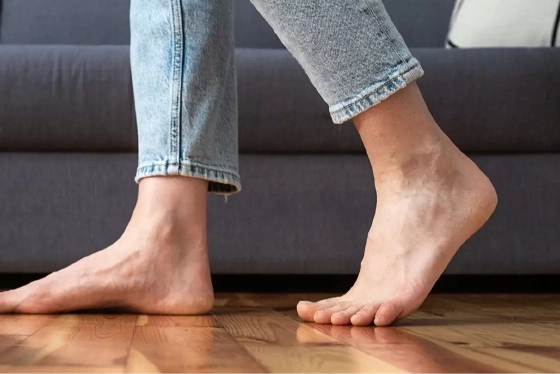
Don’t overthink this. The first step is stupid simple: stop wearing shoes and slippers inside your house. That’s it. Walk around barefoot on your floors. Cook barefoot. Watch TV barefoot. Be barefoot while you scroll through your phone pretending to be productive.
This is safe, easy, and your floors are smooth enough that you won’t hurt yourself. But even this mild stimulus is a wake-up call for feet that have been in shoes all day every day. We have a whole barefoot at home guide that goes deeper on every surface and why it all matters.
What you might notice:
- Your feet feel tired after a while, totally normal, those muscles are actually working now
- Your arches might ache a little, they’re learning to support themselves without a crutch
- You become weirdly aware of floor textures, congrats, your nerve endings are coming back online
- Your toes start spreading slightly, they’re remembering they’re supposed to have space
Pro tips for Phase 1:
Do some simple toe exercises while watching TV, spread your toes wide, try to lift each one individually, scrunch a towel with your toes. Think of it as physical therapy disguised as boredom. Start doing calf raises (both straight-leg and bent-knee) because your calves are about to become very important.
Take it outside (soft surfaces only)
Now we’re getting spicy. Time to take those newly awakened feet outdoors, but stick to forgiving surfaces. We’re talking grass, sand, smooth dirt paths. Nothing sharp, nothing too rough yet.
Start with short barefoot walks on grass, 10 to 15 minutes. Pay attention to how it feels. The Magikitos would approve of this one, those cheeky barefoot brownies have been doing it for centuries and they’ve got the strongest feet in the mythical kingdom. The uneven terrain forces tiny stabilizer muscles to fire that your living room floor didn’t activate. This is where proprioception starts leveling up.
If you have access to a beach, walking on sand is incredible. Soft sand is a workout (hello, foot and calf muscles), and firm wet sand is like a massage for your soles. Either way, your feet are getting real-world input for the first time in ages.
Key rule: keep sessions short and listen to your body. Sore calves and slightly tender soles are expected. Pain is not.
Enter the minimalist shoe
At this point, your feet have been doing barefoot homework for a month. They’re stronger, more awake, and ready for the next challenge: minimalist shoes for daily use.
A good minimalist shoe has four things:
Wide Toe Box
Zero or Low Drop
Thin, Flexible Sole
No Arch Support
Start wearing minimalist shoes for short walks and errands. Mix in your regular shoes if you need to, there’s zero shame in that. Just gradually bump up the time you spend in them each week.
Level up: harder surfaces and longer sessions
Your feet have been training for two months now. Time to introduce more challenging terrain and longer barefoot sessions.
Surface Progression
Start walking barefoot on packed dirt trails, forest paths, and eventually pebbly surfaces. Each new texture forces your feet to adapt differently. Pebbles in particular are amazing, they challenge your soles and build toughness while stimulating all those nerve endings.
What’s Happening Inside Your Feet
The skin on your soles is thickening (not callusing, there’s a difference). Your skin develops a tough but flexible pad that protects without losing sensitivity. It’s like nature’s own shoe sole, except it still lets you feel everything. Meanwhile, your intrinsic foot muscles are getting legitimately strong. Your balance is improving. Your toes are gripping and spreading like they were always meant to.
Duration Guidelines
By now, you should be able to handle 30-60 minute barefoot walks on soft natural surfaces without issues. For harder surfaces, keep it to 15-20 minutes and build up. In minimalist shoes, you might be wearing them most of the day.
Warning signs to watch for
Transition soreness is normal. Injury is not. Here’s how to tell the difference:
Normal Stuff
Slow Down
Stop & Rest
If you hit any red-zone symptoms, take a break. Go back to regular shoes for a few days. Let things calm down. Then pick up your transition at a slower pace. This isn’t failure, it’s smart training. Every athlete manages their load. You’re training your feet. Same rules apply.
Exercises that speed up the transition
Walking barefoot is great, but throwing in targeted exercises makes the transition faster and safer. Think of these as your foot gym routine:
- Toe yoga: Lift just your big toe while keeping the others down, then switch. Sounds easy? It’s hilariously hard at first. This builds independent toe control that most adults have completely lost
- Towel scrunches: Put a towel on the floor and scrunch it toward you with just your toes. 3 sets of 10. Your intrinsic foot muscles will be screaming (in a good way)
- Calf raises: Both straight-leg (for gastrocnemius) and bent-knee (for soleus). These muscles take a beating during the transition, keep them strong and stretched
- Single-leg balance: Stand on one foot for 30-60 seconds. Too easy? Close your eyes. Still too easy? Do it on a pillow. Your ankles and feet will be working overtime
- Marble pickups: Scatter some marbles on the floor and pick them up with your toes. It looks silly. It works incredibly well for building toe dexterity and grip strength
- Short foot exercise: While standing, try to shorten your foot by pulling your arch up without curling your toes. This is the holy grail of arch strengthening, Google it if you need a visual
Do these 3-4 times a week. They take maybe 10 minutes. The payoff is enormous.
How long does this actually take?
Everyone wants a specific answer, so here’s our best estimate based on real experience:
But honestly? It varies a LOT. Someone who’s been active and occasionally barefoot might cruise through in 3-4 months. Someone who’s worn rigid shoes every day for 40 years might need a full year or more. And that’s totally fine.
This isn’t a race. There’s no prize for transitioning the fastest. The prize is having healthy, strong, functional feet for the rest of your life. Take whatever time you need to get there safely.
Barefoot Transition FAQs
Your feet are worth the effort
Transitioning to barefoot isn’t complicated. It’s just slow. And in a world that wants everything NOW, that can feel frustrating. But your feet spent years (maybe decades) getting weakened by conventional shoes. Unwinding that damage takes time, patience, and consistency.
The good news? Every single day of your transition makes your feet a little bit stronger, a little more capable, a little more alive. You’ll start noticing things you never did before, the texture of grass, the warmth of sun-heated stone, the way your toes grip and adjust on uneven ground. It’s like getting a new sense you didn’t know you were missing.
Start at home. Go slow. Listen to your feet. Do the exercises. Be patient with yourself. And when you’re ready to really celebrate what bare feet can do, look into barefoot dancing. Turns out your feet already know the music.
Still fuzzy on the difference between barefoot, minimalist, and zero-drop? The barefoot shoe types guide clears up all the terminology before you start shopping.
Your feet carried you this far in prison shoes. Imagine what they’ll do once they’re free.