Skip to content
Baby feet touching green grass for the first time
Tiny feet. Enormous potential. Zero shoes needed.

Barefoot Babies

There is something about a baby’s foot that stops you in your tracks. Those miniature toes, that soft sole that’s never known a hard surface, that perfect little arch still finding its shape. It feels brand new because it is. But here’s the thing: it already knows exactly what to do.

It just needs the ground.

They arrive wired for this

What a baby's foot is actually built for

A newborn’s foot is almost entirely cartilage. Soft, flexible, still forming. The full set of 26 bones doesn’t fully harden until the late teens. This isn’t a flaw. It’s the whole point.

Those soft structures are waiting for input. They’re listening for the ground. Every surface a baby touches, feet, hands, every part of them, sends information rushing to a brain that is building itself at the fastest rate it ever will in a human life. In the first 12 months, the brain nearly doubles in size. It is not waiting around. Neither are the feet.

Here’s what those tiny soles come packed with from day one:

  • Around 200,000 nerve endings in each foot — one of the densest concentrations of sensory receptors in the whole human body. They exist to send signals. Give them something real to touch
  • Zero muscle memory yet — which means barefoot time right now shapes the patterns that will fire for a lifetime. The gait, the balance, the proprioception. All of it being written in these early months
  • A completely undeformed foot — no bunions, no compressed arches, no squished toes. The natural spread of a baby’s foot is what barefoot adults spend years trying to get back to. Your baby already has it
  • Developmental reflexes that crave texture — the Babinski reflex, the plantar grasp reflex in the toes. These are neurological checkpoints that need sensory input from the ground to develop properly. A thick sole between the foot and the world muffles the very signals these reflexes are looking for

The foot anatomy of even a newborn is quietly extraordinary — 26 bones in the making, 33 joints, hundreds of nerve endings all talking to a brain that is ready to listen.

The chapter that matters most

Why the crawling phase is barefoot or bust

Before the first steps, there’s crawling. And crawling barefoot is one of the most important physical experiences of early childhood, not just for the feet, but for the whole system those feet are connected to.

When a baby crawls barefoot on a real surface, something remarkable happens:

Neural pathways in real time

The grip of bare toes against the floor sends a very specific pattern of signals to the developing motor cortex. This sensation, toes gripping, pressure shifting, skin reading texture, is part of what teaches the brain to coordinate movement. Socks muffle it. Crawling shoes cut it off.

Balance starting now

The proprioceptive system, the body’s internal GPS, begins calibrating during crawling. Barefoot crawling on varied surfaces — carpet, wood, grass, tiles — gives that system more data to work with. More data means better calibration. Better calibration means steadier first steps.

The foot-brain feedback loop

During crawling, feet and hands are equal partners. Barefoot at both ends creates a full-body feedback loop that footwear breaks. There’s a reason babies instinctively use their toes to grip and push — it’s not a habit to be corrected with shoes. It’s a reflex doing exactly its job.

The research here is consistent. Babies who spend more time barefoot during crawling and early walking show better balance, stronger foot muscles, and more confident movement as toddlers. The floor is not a hazard during this phase. The floor is the teacher.

The moment everything changes

First steps: the ground is the whole point

The first time a baby lets go and takes a step on their own is one of those moments. Shaky, determined, absolutely convinced they can do this. And what’s happening in that brain in that second is extraordinary.

Every step of early walking is a live negotiation with gravity. The foot lands, the toes spread for stability, the ankle makes dozens of tiny adjustments per second, the brain receives feedback and immediately updates its model of how this whole thing works. Barefoot on a real surface, the full conversation happens. Inside a padded shoe, a lot of it gets lost.

This is why pediatric podiatrists almost universally recommend barefoot time for new walkers. Not because shoes are bad in every context, but because the foot needs the complete dialogue with the ground while it’s still learning the language.

The grass under those first wobbly steps isn’t just a nice setting. It’s the ground connection every human foot was designed to have, offered at exactly the moment the brain is most ready to learn from it.
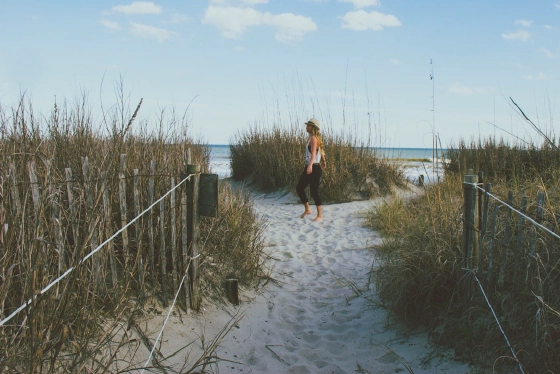
Bare feet on grass and natural ground
The questions every parent has

Cold floors, germs, and everything else: honest answers

Every parent who hears “let your baby go barefoot more” has the same three worries. They’re all worth addressing properly.

The cold floor fear

Cold feet do not cause colds or illness. This one has been thoroughly studied and the answer is clear: viruses cause colds, not cold floors. Brief contact with a cool surface actually stimulates circulation and is totally normal. The tradition of keeping baby feet warm at all costs is older than germ theory and hasn’t quite caught up with the science. Barefoot myths covers this in full.

Germs on the floor

Inside your own clean home? Completely fine. In the garden on grass? Generally fine and actually beneficial for building a healthy microbiome. Public spaces like shopping centres or airports? Use judgment, same as you would for hands. A baby’s immune system benefits from appropriate environmental exposure. The goal isn’t a sterile foot. It’s a well-developed one.

Injury worry

On known, safe surfaces — your home floors, your garden — the injury risk from going barefoot is low and is offset by the developmental benefit. On genuinely hazardous surfaces, use foot protection. The calculation isn’t “always shoes” or “never shoes.” It’s reading the situation.

Cold weather

Indoors in winter: fine. Outside in actual cold or wet conditions: protect those little feet from real cold exposure, of course. The barefoot principle doesn’t mean outdoor barefoot in January. It means maximising barefoot time on safe indoor surfaces and warm outdoor surfaces whenever the chance is there.
The Brownies were born knowing this
In British and Scottish folklore, Brownies are the barefoot woodland spirits who move through the world in constant contact with the earth. Their tiniest ones never wore shoes either. Watch a baby’s toes curl into grass for the first time — that instinctive grip, that little look of recognition — and it feels like exactly what the stories are describing. They weren’t taught that reflex. It was already there. The Magikitos carry the same knowledge: barefoot as the most natural state there is, before anyone has the chance to suggest otherwise.
Real questions, straight answers

Barefoot babies: everything parents ask

From birth, indoors on safe surfaces. Before walking, bare feet on clean floors is ideal for sensory development. Once they start pulling up and taking first steps, barefoot continues to be the recommendation on safe surfaces. The general principle: maximise barefoot time whenever the environment is safe and the temperature is reasonable.
Thin socks for warmth are fine. Thick rubber-soled crawler shoes or chunky grip socks that reduce sensation are what you want to avoid. If you need warmth, thin cotton socks work. When in doubt: bare skin on a safe clean floor beats any sock for developmental purposes.
Yes, honestly. That sock-pulling isn’t misbehaviour — it’s a sensory drive. Babies have a strong instinct to feel what’s under their feet and the feedback from bare skin on surfaces is genuinely something they seek out. Let them. When you can, let their feet do exactly what they’re trying to do.
Not indoors. For inside the home, bare feet are the near-universal recommendation from pediatric podiatrists for new walkers. When outdoor conditions require protection from hazards or cold, look for thin, flexible, wide toe box options that let the foot move and feel as much as possible. Avoid rigid, stiff-soled shoes during the first walking phase — they do the foot’s job for it, and the foot needs to do its own job right now.
Flat feet in babies are completely normal. The arch develops over time through muscle activity, and barefoot time is one of the best ways to encourage that process. If you’re concerned, a quick chat with your GP or health visitor will reassure you. Most children under 5 appear to have flat feet naturally and develop arches through movement. See the flat feet guide for the full picture.
Yes. A baby crawling across cool tiles is getting good circulatory stimulation, not catching a cold. Colds come from viruses, not floors. The cold-floor worry is more cultural tradition than medicine. Trust the floor a little more — it’s doing good work down there.
The whole thing, short

Those feet already know

Your baby arrived with one of the most sophisticated sensory systems imaginable, packed into the softest, most curious feet you’ve ever seen. They don’t need support. They don’t need cushioning. They don’t need protection from your living room floor.

They need contact. Texture. The chance to read the world the way feet are designed to read it, starting now, while the brain is at its most plastic and the foot is at its most adaptable.

Let them crawl barefoot on the kitchen tiles. Let them stand in the garden and feel what grass is. Let them pull their socks off, because they know something. They’ve always known.

The rest of childhood — all the balance, the strong feet, the confident movement — starts right there.

  • Barefoot kids: how this carries forward from toddler through to the teenage years
  • Foot anatomy: the full architecture of what’s developing in those tiny feet
  • Barefoot at home: the simplest daily practice for the whole family
  • Earthing: what actually happens when bare skin meets the ground
  • Barefoot myths: the full truth about cold floors and every other worry
FEETBETTER

United by the ground we walk on, Feetbetter is the largest non-profit movement dedicated to the barefoot lifestyle. We exist to remind you that every step on sand, grass or rock is a return to your true self. No shops, no gimmicks, just the desire to walk together toward a freer life.

@feet.better